
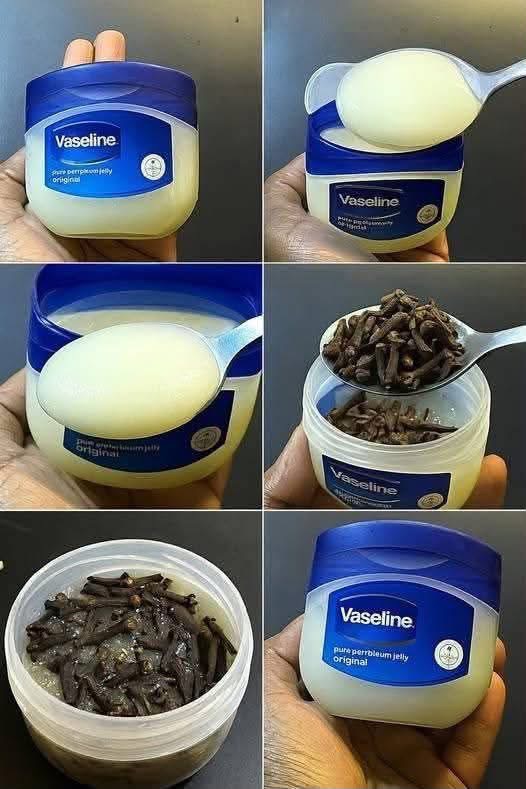
Clove-Infused Vaseline is a simple homemade topical balm made by gently infusing whole cloves into petroleum jelly. Petroleum jelly is well known for creating an occlusive layer that helps reduce moisture loss from the skin, while cloves add a naturally warm, spicy aroma.
This DIY balm can be used as a moisturizing skin protectant for areas such as dry heels, rough elbows, and dry patches. Cloves contain eugenol, but concentrated clove preparations can irritate sensitive skin, so this recipe should be used cautiously and should not be presented as a treatment for pain, arthritis, infections, or other medical conditions.
Recipe Overview
| Category | Details |
| Prep Time | 5 minutes |
| Infusion Time | 30–60 minutes |
| Cooling Time | 1–2 hours |
| Total Time | About 2–3 hours |
| Yield | About ½ cup |
| Course | DIY Skincare |
| Difficulty | Easy |
| Best For | Dry, rough skin |
Why You’ll Love This DIY Balm
- 🧴 Helps seal moisture into dry skin.
- 🌿 Uses simple ingredients.
- 🌸 Has a naturally warm clove fragrance.
- 👣 Useful for dry heels and rough elbows.
- 💰 Inexpensive to prepare at home.
- 🫙 Easy to store in a small clean container.
- ✨ Requires no complicated equipment.
Ingredients
Main Ingredients
| Ingredient | Amount |
| Plain petroleum jelly (Vaseline) | ½ cup / about 115 g |
| Whole cloves | 1 tbsp |
Optional Additions
| Ingredient | Amount |
| Vitamin E oil | ½ tsp, optional |
| Sweet almond oil | 1 tsp, optional |
Note: Keep the recipe simple if you have sensitive skin. Adding more essential oils or concentrated clove oil can increase the risk of irritation.
Step-by-Step Instructions
1. Prepare the Cloves
Measure 1 tablespoon of whole cloves.
For a slightly stronger infusion, gently crush a few cloves with the back of a spoon. Avoid turning them into a fine powder because they will be harder to strain later.
2. Melt the Petroleum Jelly
Place the petroleum jelly in a heat-safe glass or stainless-steel container.
Set it over a double boiler or warm-water bath and heat gently until the petroleum jelly becomes liquid.
Do not place petroleum jelly directly over a flame.
3. Add the Whole Cloves
Once the petroleum jelly has melted, add the whole cloves.
Stir gently so the cloves are completely coated.
4. Infuse
Keep the mixture warm over very low heat for approximately 30–60 minutes.
Do not allow the mixture to boil.
The petroleum jelly will gradually take on the aroma of the cloves.
5. Strain
Remove the mixture from the heat.
While it is still liquid but no longer extremely hot, carefully strain it through a fine-mesh strainer or clean cheesecloth into a clean, dry container.
Make sure no sharp pieces of clove remain in the finished balm.
6. Cool and Solidify
Allow the mixture to cool at room temperature.
As the petroleum jelly cools, it will return to its thick, semi-solid consistency.
Once completely cool, close the container with a clean lid.
7. Apply
Apply a small amount to clean, dry skin.
For dry heels, elbows, or hands, gently massage a thin layer into the skin.
For very dry feet, applying the balm before bed and wearing clean cotton socks can help reduce moisture loss overnight.
Best Tips
Use plain petroleum jelly. Avoid products containing unnecessary fragrances if you’re making this for sensitive or dry skin.
Don’t overheat the petroleum jelly. Gentle melting is sufficient.
Strain carefully. Small pieces of cloves can be abrasive and irritating to the skin.
Use a thin layer. Petroleum jelly is highly occlusive, so you generally don’t need much.
Patch test first. Clove can irritate sensitive skin.
Keep water out of the jar. Water contamination can shorten the shelf life of homemade preparations.
Best Ingredient Options
Petroleum Jelly
Plain petroleum jelly is the best base because it forms an occlusive barrier that reduces transepidermal water loss.
Whole Cloves
Whole cloves are preferable to clove powder because they are easier to remove after infusion.
Vitamin E
A small amount of vitamin E can be added for cosmetic purposes, although it is not necessary for the balm to work as a moisturizer.
Recipe Variations
Clove Foot Balm
Prepare the balm as directed and use a small amount on clean, dry heels before bedtime.
Clove Hand Balm
Apply a thin layer to dry hands, especially after washing.
Clove & Cinnamon Balm
For fragrance only, you can add a very small amount of cinnamon during infusion. However, cinnamon can also irritate sensitive skin, so patch testing is particularly important.
Unscented Moisturizing Balm
Skip the cloves entirely and use plain petroleum jelly if your skin is sensitive or easily irritated.
What to Use It For
This balm is best suited to areas that commonly become dry or rough, including:
- Dry heels
- Rough elbows
- Dry hands
- Knees
- Chapped areas of skin
- Dry patches
Petroleum jelly can be particularly useful as a protective barrier because it helps reduce moisture loss.
Make-Ahead Instructions
This balm is designed to be prepared ahead of time.
Once cooled and solidified, keep it in a clean, dry, tightly closed container.
Always use clean, dry hands or a small cosmetic spatula when removing the balm to minimize contamination.
Storage
Store the balm in a cool, dry place away from direct sunlight and excessive heat.
Because this is a homemade preparation without a cosmetic preservative system, make small batches and discard it if you notice an unusual odor, appearance, or contamination.
Reheating
Reheating the finished balm isn’t necessary.
If it becomes too firm, simply allow the container to sit at room temperature for a few minutes before use.
Avoid repeatedly heating and cooling the entire jar.
Freezing
Freezing is not recommended.
Repeated temperature changes can alter the texture and make the balm less pleasant to use. A small fresh batch is preferable.
Common Mistakes to Avoid
- Applying it without a patch test — clove can irritate sensitive skin.
- Using too many cloves — a stronger infusion isn’t necessarily better.
- Adding undiluted clove essential oil — this can substantially increase irritation risk.
- Applying it to broken skin — don’t use the balm on open wounds.
- Applying near the eyes or mucous membranes — avoid these areas.
- Leaving clove pieces in the balm — they can scratch or irritate the skin.
- Using dirty fingers or wet utensils — this can contaminate the preparation.
- Treating it as a painkiller or medical treatment — evidence for homemade clove-infused petroleum jelly as a treatment for joint or muscle pain is limited.
Safety Precautions
Before using the balm, perform a patch test on a small area of intact skin and wait to see whether irritation develops.
Stop using it if you experience burning, redness, swelling, itching, or a rash.
Avoid applying it:
- To open wounds
- To severely irritated skin
- Around the eyes
- Inside the nose or mouth
- To mucous membranes
If you have a known allergy to cloves or other spices in the same botanical family, avoid this preparation.
If persistent joint pain, muscle pain, skin inflammation, or another medical problem is the reason you’re considering this balm, it’s better to address the underlying condition with a healthcare professional rather than relying on a homemade topical remedy.
Nutrition Estimate
This product is intended for external use, so nutrition information is not applicable.
| Nutrient | Amount |
| Calories | Not applicable |
| Protein | Not applicable |
| Carbohydrates | Not applicable |
| Fat | Not applicable |
| Fiber | Not applicable |
| Sugar | Not applicable |
Frequently Asked Questions
Does clove-infused Vaseline moisturize the skin?
The moisturizing effect primarily comes from the petroleum jelly, which forms an occlusive layer that helps reduce moisture loss from the skin.
Can I use this balm on my feet?
Yes. A small amount can be applied to dry heels and feet. For overnight use, clean cotton socks can help keep the balm in place.
Can I use it on my face?
It’s better to be cautious. Clove can irritate facial skin, particularly sensitive skin, and petroleum jelly may feel heavy for some people. Avoid the eye area and patch test first.
Can I use clove essential oil instead of whole cloves?
I wouldn’t recommend simply substituting essential oil at an equal amount. Essential oils are much more concentrated than whole cloves and can cause skin irritation if improperly diluted.
Does this balm relieve arthritis or joint pain?
There isn’t enough clinical evidence to recommend homemade clove-infused petroleum jelly as a treatment for arthritis or chronic joint pain. It should be considered a cosmetic moisturizing balm rather than a medical treatment.
How long does homemade clove Vaseline last?
Because this recipe is homemade and doesn’t contain a professionally formulated preservative system, it’s best to make a small batch and monitor it for changes in smell, texture, or appearance. Keep it dry and uncontaminated.
Can I use it on cracked skin?
Petroleum jelly can help protect and moisturize intact, dry, cracked skin, but don’t apply a homemade clove preparation to deep cracks that are bleeding, infected, or otherwise open.
Can I make it without cloves?
Absolutely. Plain petroleum jelly is often the simpler choice for very sensitive or irritated skin.
Final Thoughts
Clove-Infused Vaseline is a simple DIY balm that combines the moisture-sealing properties of petroleum jelly with the warm aroma of cloves. It’s particularly suited to dry areas such as heels, elbows, hands, and rough patches of skin.
The key is to keep the formulation gentle: use a modest amount of whole cloves, strain the mixture thoroughly, patch test before use, and avoid broken or sensitive skin. While cloves contain eugenol and have traditionally been used in topical preparations, this homemade balm shouldn’t be promoted as a proven treatment for arthritis, infections, or significant pain.