
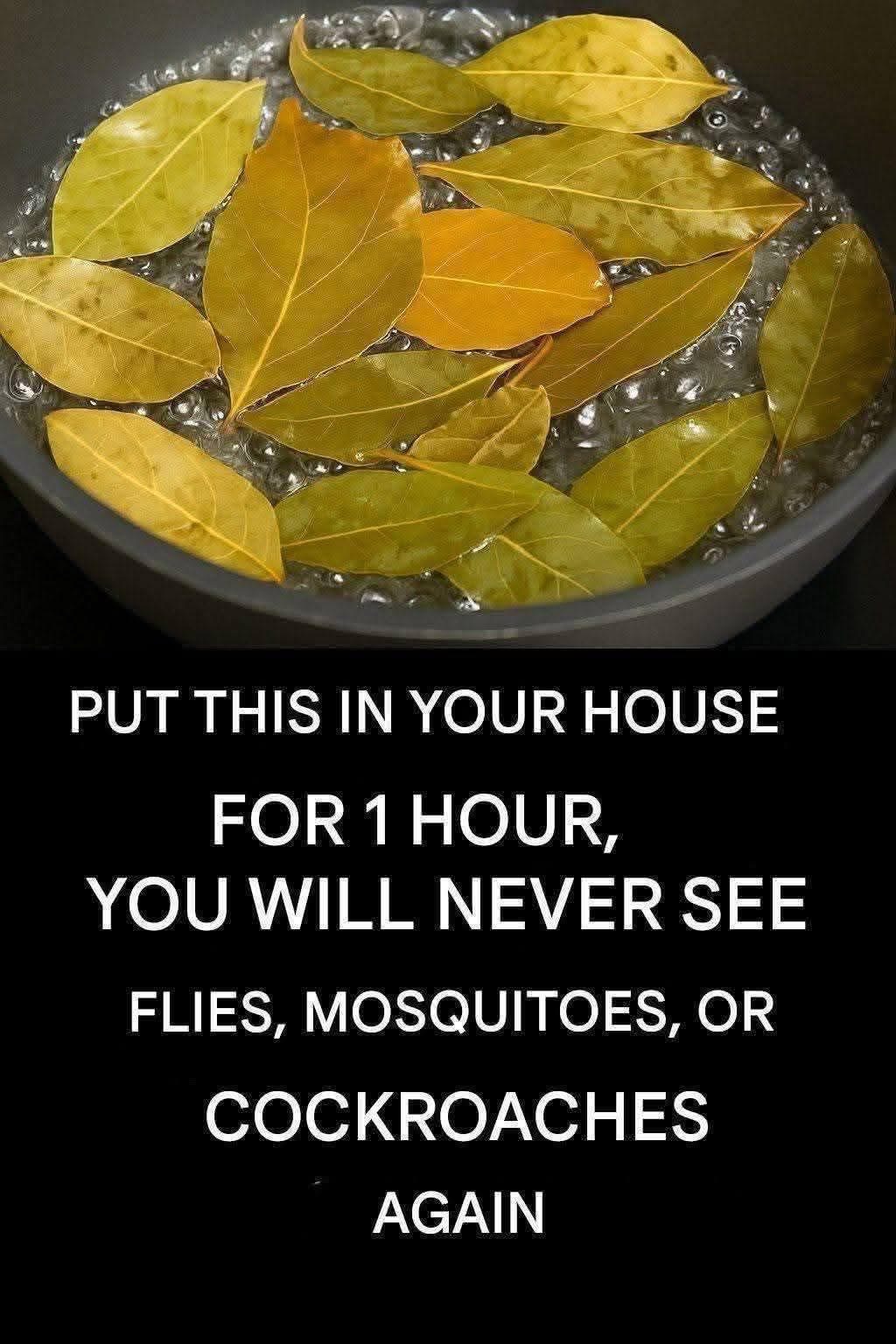
If you are looking for a simple way to freshen your home and add a natural herbal aroma, boiled bay leaves are an easy option to try. Bay leaves contain aromatic compounds that produce a strong herbal scent, and many people use bay leaf preparations as a traditional household remedy for discouraging insects.
However, claims that simply placing boiled bay leaves in your home will completely eliminate flies, mosquitoes, or cockroaches are not well established. Bay leaf water should be considered a household experiment or aromatic freshener rather than a guaranteed pest-control treatment.
Recipe Overview
| Category | Details |
| Prep Time | 2 minutes |
| Cook Time | 10–15 minutes |
| Total Time | 15–20 minutes |
| Yield | About 2 cups |
| Course | Natural Home Freshener |
| Difficulty | Very Easy |
| Best For | Kitchen, entryways, and common areas |
Why You’ll Love This Recipe
- Uses inexpensive bay leaves.
- Requires only water and a saucepan.
- Creates a pleasant herbal aroma.
- Easy to prepare in under 20 minutes.
- Can be used as a simple natural room freshener.
- Suitable for experimenting with traditional home remedies.
- No complicated ingredients or equipment required.
Ingredients
Basic Bay Leaf Water
| Ingredient | Amount |
| Dried bay leaves | 8–10 |
| Water | 2 cups |
| Optional cinnamon stick | 1 |
| Optional cloves | 1 tsp |
For a Homemade Spray
| Ingredient | Amount |
| Prepared bay leaf water | 1½ cups |
| White vinegar | ½ cup |
| Optional lemon peel | A few strips |
| Spray bottle | 1 |
Important: Never mix vinegar with bleach or bleach-containing cleaning products.
Step-by-Step Instructions
1. Prepare the Bay Leaves
Use clean, dry culinary bay leaves. Check them for dust or debris.
For a stronger infusion, gently crush or tear the leaves before adding them to the water.
2. Boil the Water
Pour 2 cups of water into a small saucepan.
Bring the water to a boil over medium-high heat.
3. Add the Bay Leaves
Add 8–10 bay leaves to the boiling water.
Reduce the heat and allow the mixture to simmer gently for 10–15 minutes.
For extra fragrance, add a cinnamon stick or a teaspoon of whole cloves.
4. Turn Off the Heat
Remove the saucepan from the stove and allow the infusion to cool for approximately 10 minutes.
The water should have a noticeable herbal aroma.
5. Strain
Pour the liquid through a fine-mesh strainer into a clean bowl or measuring jug.
Discard the bay leaves and any other solid ingredients.
6. Use Around the Home
Once completely cooled, the bay leaf water can be placed in small bowls around areas where you want an herbal scent.
For a spray, combine the cooled bay leaf infusion with vinegar in a clean spray bottle.
Shake gently before each use.
Best Tips
Use whole bay leaves. Freshly opened or good-quality dried leaves tend to provide a stronger aroma.
Make a concentrated infusion. More leaves and a longer gentle simmer will create a stronger-smelling preparation, although this does not guarantee better pest control.
Let it cool completely before spraying. Hot liquid can damage surfaces and is unsafe to handle.
Refresh regularly. Natural herbal aromas fade with time, so replace the mixture frequently rather than relying on old liquid.
Keep the home clean. Food crumbs, standing water, trash, and uncovered food are often much more important factors in attracting household pests.
Best Ingredient Options
Bay Leaves
Dried Mediterranean bay leaves are the easiest choice for this preparation.
Cinnamon
Cinnamon adds a warm fragrance and works especially well in kitchen-focused home fresheners.
Cloves
Whole cloves create a stronger, spicy aroma and can be added to the boiling water.
Lemon Peel
Fresh lemon peel gives the infusion a bright citrus note.
Recipe Variations
Bay Leaf & Cinnamon Water
Add one cinnamon stick while simmering for a warm, cozy fragrance.
Bay Leaf & Clove Infusion
Add 1 teaspoon of whole cloves for a stronger spicy herbal scent.
Bay Leaf Lemon Spray
Add several strips of lemon peel while simmering, then strain thoroughly before transferring the cooled liquid to a spray bottle.
Bay Leaf Kitchen Freshener
Prepare the infusion without vinegar and place small bowls of it near the kitchen, garbage area, or entryway for fragrance.
What to Use It With
This homemade bay leaf preparation can be part of a broader home-cleaning routine alongside:
- Regularly wiping kitchen surfaces
- Sealing food containers
- Emptying garbage frequently
- Cleaning crumbs and spills
- Keeping drains clean
- Repairing leaking taps or pipes
- Using window screens
- Sealing cracks and gaps
For an established infestation, commercially approved pest-control products or professional pest management are generally more reliable than herbal remedies.
Make-Ahead Instructions
You can prepare the bay leaf infusion ahead of time.
Allow it to cool completely, transfer it to a clean sealed container, and refrigerate it.
For best quality, prepare a fresh batch every few days rather than storing it for a long period.
Storage
Store unused bay leaf water in a covered container in the refrigerator for up to 3 days.
Discard it sooner if it develops an unusual smell, cloudy appearance, or signs of spoilage.
Reheating
Reheating is not necessary.
For a stronger aroma, it is usually better to prepare a fresh batch rather than repeatedly reheating an old infusion.
Freezing
Bay leaf water can be frozen in ice-cube trays for approximately 1–2 months.
Thaw the desired amount in the refrigerator and use promptly.
Common Mistakes to Avoid
- Assuming bay leaf water will eliminate an infestation — herbal preparations are not a substitute for effective pest control.
- Using old liquid — stale homemade infusions can spoil.
- Spraying without testing a surface — vinegar and concentrated herbal liquids may affect some finishes.
- Leaving the mixture where children or pets can access it.
- Ignoring the source of the infestation — removing food, water, and entry points is essential.
Safety Notes
Bay leaves used in cooking are different from using concentrated herbal preparations.
Do not spray the mixture directly onto food, food-preparation surfaces without cleaning afterward, electrical equipment, or delicate materials.
Also, don’t assume bay leaf water is safe for every pet, particularly if you plan to spray areas where animals lick surfaces. Keep homemade preparations out of reach of children and pets.
Nutrition Estimate
This preparation is primarily intended for household use rather than drinking.
| Nutrient | Estimated Amount |
| Calories | Negligible |
| Protein | Negligible |
| Carbohydrates | Negligible |
| Fat | Negligible |
| Fiber | Negligible |
| Sugar | 0 g |
Frequently Asked Questions
Do bay leaves really repel cockroaches?
Bay leaves have a strong aromatic scent and are traditionally suggested as a cockroach deterrent, but there is not enough evidence to conclude that boiled bay leaf water will reliably repel or eliminate cockroaches in a home.
Can bay leaves keep flies away?
The aroma may be unpleasant to some insects, but bay leaf water should not be considered a dependable fly-control method.
Does bay leaf water kill mosquitoes?
There is no good basis for claiming that simply boiling bay leaves and placing the resulting water around a room will kill mosquitoes. Mosquito control is better handled with proven methods such as eliminating standing water, using screens, and using appropriate insect repellents.
How often should I make bay leaf water?
For a homemade preparation, making a fresh batch every 2–3 days is a practical approach.
Can I add cinnamon and cloves?
Yes. Cinnamon and cloves can be added to create a stronger, warmer fragrance.
Can I spray bay leaf water around the kitchen?
Yes, provided the solution is cooled, the surface is compatible with the ingredients, and food-contact surfaces are properly cleaned afterward.
Is bay leaf water safe to drink?
This recipe is designed as a household preparation, not a beverage. Culinary bay leaves are commonly used in food, but concentrated herbal preparations should not automatically be assumed to be safe to consume.
Final Thoughts
Bay Leaf Bug-Repellent Water is an easy, inexpensive way to experiment with a traditional natural home remedy while adding a pleasant herbal aroma to your space. Boiling bay leaves with optional cinnamon, cloves, or lemon peel takes only a few minutes.
Just keep expectations realistic: bay leaves are not a proven replacement for proper pest control. For persistent flies, mosquitoes, or cockroaches, combine good sanitation and exclusion practices with an effective pest-control method.