
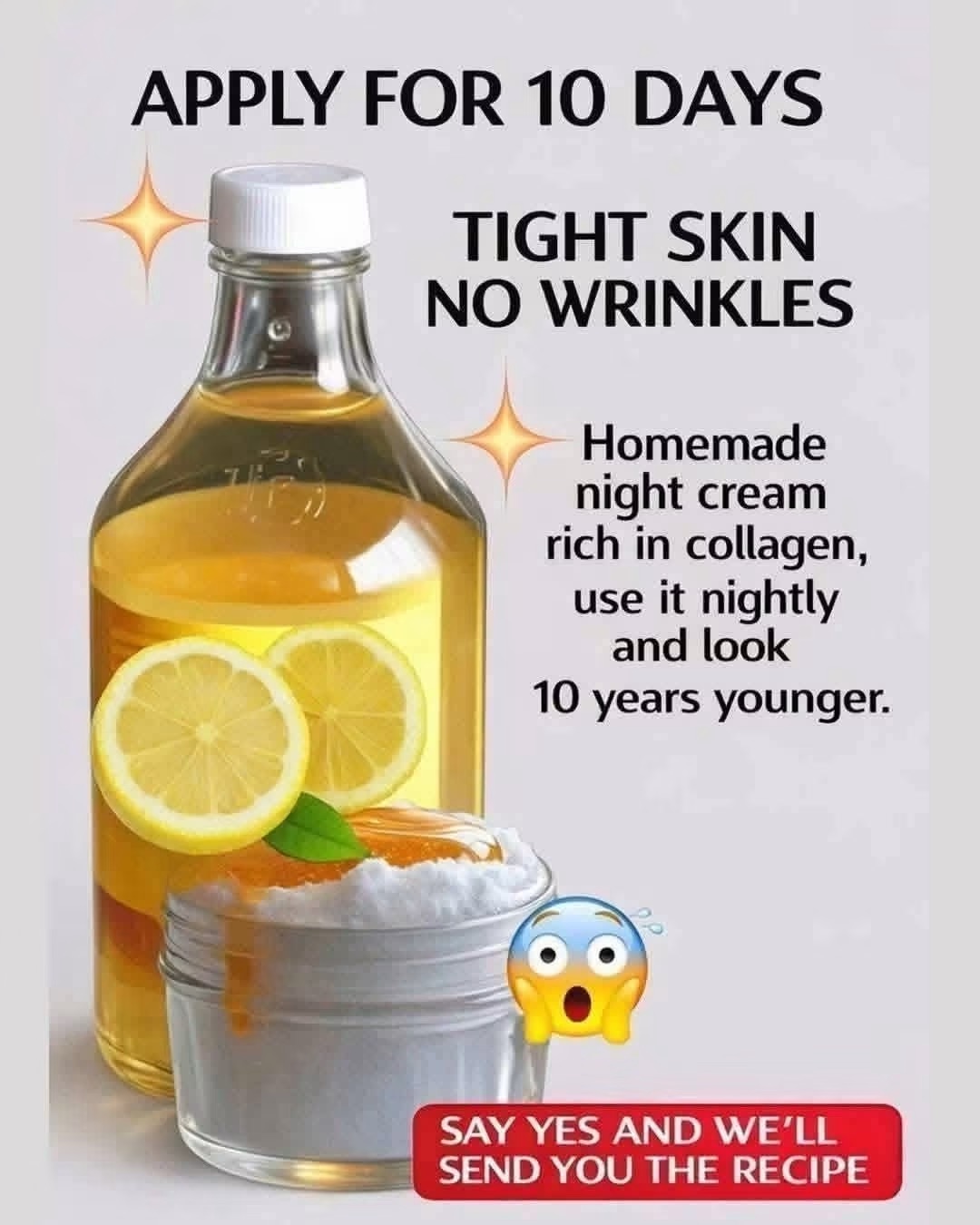
Social media is full of homemade skincare recipes promising dramatically tighter skin, erased wrinkles, visible collagen, and a “10 years younger” appearance in just 10 days. While a simple homemade moisturizer may temporarily make dry skin look smoother, there is no DIY mixture that can safely erase wrinkles or tighten sagging skin in 10 days.
More importantly, recipes containing fresh lemon juice should not be applied directly to the face. Citrus juice can react with sunlight and cause a painful skin reaction, blistering, and dark discoloration.
If your goal is healthier, smoother, more youthful-looking skin, the better approach is a gentle skincare routine based on ingredients with dermatological evidence.
Recipe Overview
| Category | Details |
| Recipe Type | Gentle DIY Moisturizing Skin Treatment |
| Best For | Dry or dehydrated skin |
| Main Benefit | Temporary hydration and smoother-looking skin |
| Prep Time | 5 minutes |
| Application Time | 10–15 minutes |
| Difficulty | Easy |
| Frequency | 1–2 times per week |
| Important Note | Not a collagen treatment or wrinkle cure |
Why You’ll Love This Approach
A simple moisturizing treatment can be useful when your skin feels dry, tight, or rough.
You may notice:
- Softer-feeling skin
- Improved surface hydration
- A temporary plumping effect
- A smoother appearance of very fine dehydration lines
- A more comfortable skin barrier
Moisturizers work partly by trapping water in the skin, which can make fine lines appear less noticeable. However, this effect is temporary and is different from actually rebuilding or lifting deeper skin structures.
Ingredients
Gentle Hydrating Option
| Ingredient | Amount | Purpose |
| Fragrance-free facial moisturizer | 1 teaspoon | Hydrates and supports the skin barrier |
| Pure aloe vera gel* | ½ teaspoon | Provides a lightweight moisturizing feel |
| Hyaluronic-acid serum* | 2–3 drops | Helps increase surface hydration |
*Choose products specifically formulated for facial use and follow the manufacturer’s directions.
What NOT to Add
| Ingredient | Why Avoid It |
| Fresh lemon juice | Can irritate skin and react with sunlight |
| Lime juice | Similar citrus-related photoreaction risk |
| Undiluted essential oils | Can irritate or cause allergic reactions |
| Baking soda | Can be irritating and disrupt the skin barrier |
| Undiluted vinegar | Too irritating for many facial skin types |
| Coarse sugar scrubs | Can cause mechanical irritation |
The American Academy of Dermatology also cautions that essential oils can be too strong for facial masks and may cause irritation or allergic reactions.
Step-by-Step Instructions
1. Cleanse Your Face
Wash your face with a gentle cleanser and lukewarm water.
Avoid aggressive scrubbing. Pat your skin dry with a clean, soft towel.
2. Prepare the Moisturizing Treatment
Mix the facial moisturizer with the aloe vera gel and hyaluronic-acid serum in a clean container.
Do not add lemon juice, citrus juice, or essential oils.
3. Perform a Patch Test
Before using a new skincare product on your face, test a small amount on an inconspicuous area.
The AAD recommends testing products on a small area twice daily for several days before applying them more widely.
4. Apply a Thin Layer
Apply a small amount to clean skin.
Avoid the eyelids and the immediate area around the eyes unless the product is specifically designed for that area.
5. Leave It On
Because this is primarily a moisturizing treatment, you can leave a properly formulated facial moisturizer on the skin according to its product instructions.
There is no need to leave homemade mixtures on overnight.
6. Finish With Sunscreen in the Morning
If using this routine during the daytime, finish with a broad-spectrum SPF 30 or higher sunscreen.
Daily sun protection is one of the most important steps for preventing premature skin aging, wrinkles, and age spots.
The Truth About “DIY Collagen” Creams
The word collagen is frequently used in viral skincare content, but a homemade mixture containing lemon, honey, or cooking oils does not suddenly become a collagen treatment.
Collagen is a structural protein in the body. Simply putting a food ingredient on your skin does not mean that usable collagen will penetrate the skin and rebuild deeper collagen structures.
A moisturizer can improve hydration and temporarily make skin look smoother, but that is very different from stimulating substantial new collagen production.
Dermatologists note that skin-firming creams generally produce subtle results at best, while retinoids can help the body make more collagen over time.
Why Lemon Juice Should Not Be Used on Your Face
Fresh lemon juice may sound appealing because lemons contain vitamin C, but food-grade lemon juice is not the same thing as a professionally formulated vitamin C serum.
Lemon juice can:
- Irritate the skin
- Damage the skin barrier
- Cause burning or redness
- Increase sensitivity when combined with sunlight
- Trigger a blistering reaction
- Leave behind dark pigmentation
The AAD specifically warns that citrus juice on the skin can interact with sunlight and cause a blistering rash or painful swelling.
If you accidentally get lemon or other citrus juice on your skin, wash the area thoroughly with water and protect it from sunlight.
What About Honey and Natural Oils?
Honey and certain plant oils can provide moisturizing or emollient benefits, but they should not be described as miracle anti-aging treatments.
A natural ingredient can still cause irritation or allergy, and “natural” does not automatically mean “safe for the face.”
For facial skincare, a properly formulated moisturizer is generally a more predictable choice than a kitchen mixture.
Evidence-Based Anti-Aging Skincare
If your goal is to reduce the appearance of wrinkles and support healthier-looking skin, focus on a consistent routine.
1. Broad-Spectrum Sunscreen
Use a broad-spectrum SPF 30 or higher every day.
Sun protection helps reduce UV-related premature aging and protects against wrinkles and age spots.
2. Moisturizer
A good moisturizer helps the skin retain water and can make fine lines temporarily less noticeable.
Look for ingredients such as:
- Hyaluronic acid
- Glycerin
- Ceramides
- Squalane
3. Retinol or Retinoids
Retinoids are among the better-studied topical ingredients for fine lines, wrinkles, uneven pigmentation, and skin texture.
The AAD notes that retinoids can increase collagen and improve the appearance of fine lines and wrinkles over time.
Start slowly because irritation can make skin appear worse temporarily.
Important: Retinoids should not be used during pregnancy.
4. Vitamin C Serum
A properly formulated vitamin C skincare product can help address signs of skin aging and dark spots. Dermatologists recommend using a formulated vitamin C serum rather than applying raw lemon juice to the skin.
Best Tips for Younger-Looking Skin
- Wear sunscreen every morning.
- Moisturize consistently.
- Avoid tanning beds.
- Don’t scrub your face aggressively.
- Introduce one active skincare product at a time.
- Patch-test new products.
- Stop using products that burn or sting.
- Give anti-aging products enough time to work.
- Avoid viral DIY treatments containing irritating ingredients.
Dermatologists emphasize that most anti-aging products need weeks rather than days to show meaningful results.
Common Mistakes to Avoid
Mistake 1: Using Lemon Juice as Vitamin C
Raw lemon juice isn’t an appropriate substitute for a formulated vitamin C serum.
Mistake 2: Expecting a 10-Day Facelift
No cream can reproduce the results of a facelift or dramatically tighten loose skin overnight.
Mistake 3: Mixing Too Many Active Ingredients
Using multiple anti-aging products simultaneously can irritate the skin. The AAD recommends introducing products carefully and giving them time to work.
Mistake 4: Ignoring Sunscreen
Using expensive anti-aging products while regularly exposing unprotected skin to UV radiation can work against your skincare goals.
Mistake 5: Assuming “Natural” Means Safe
Lemon juice, essential oils, vinegar, and other natural substances can still irritate facial skin.
A Simple Morning Routine
Step 1: Gentle cleanser
Step 2: Vitamin C serum, if tolerated
Step 3: Moisturizer
Step 4: Broad-spectrum SPF 30+ sunscreen
A Simple Evening Routine
Step 1: Gentle cleanser
Step 2: Retinol/retinoid if appropriate for you
Step 3: Moisturizer
If your skin is sensitive, introduce active ingredients gradually rather than starting several products at once.
Frequently Asked Questions
Can lemon juice remove wrinkles?
No. Lemon juice is not a proven wrinkle treatment and can irritate facial skin. Citrus exposure combined with sunlight can cause a painful skin reaction and pigmentation.
Can a homemade cream produce collagen?
A kitchen mixture cannot be considered a clinically proven collagen treatment. Certain evidence-based topical ingredients, particularly retinoids, can support collagen-related changes over time.
Can I look 10 years younger in 10 days?
That is not a realistic expectation from a cream or homemade skincare treatment. Dermatologists specifically caution against exaggerated anti-aging promises.
Does moisturizer reduce wrinkles?
Moisturizer can temporarily plump the skin with water, making some fine lines less visible. It does not permanently remove wrinkles.
What is the most important anti-aging skincare step?
Daily sun protection is one of the most important foundations of an anti-aging skincare routine. Dermatologists recommend broad-spectrum SPF 30 or higher.
Is vitamin C good for aging skin?
A properly formulated topical vitamin C product can help with signs of skin aging and dark spots. It is preferable to applying raw lemon juice directly to the skin.
When should I see a dermatologist?
See a dermatologist if you have persistent irritation, unexplained pigmentation, significant skin changes, severe acne, or if you want professional options for wrinkles, loose skin, or sun damage.
Final Thoughts
The viral idea of mixing lemon juice, oils, honey, or other kitchen ingredients to create a “DIY collagen night cream” may sound attractive, but there is no reliable evidence that such a mixture can tighten skin, erase wrinkles, create collagen, or make someone look 10 years younger in 10 days.
For healthier and more youthful-looking skin, keep things simple: gentle cleansing, consistent moisturizing, daily SPF 30+ sunscreen, and evidence-based anti-aging ingredients such as retinoids or properly formulated vitamin C. These approaches are much safer and more realistic than applying raw lemon juice or other potentially irritating kitchen ingredients to your face.