
Introduction
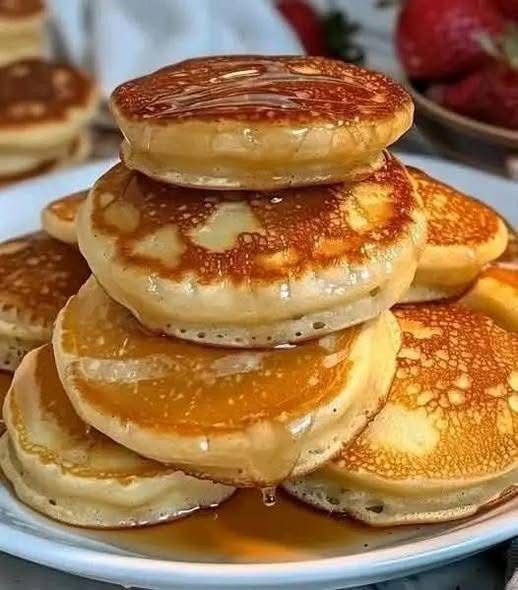
Nothing beats a stack of warm, fluffy homemade pancakes drizzled with golden maple syrup. With their soft, tender centers, beautifully golden surfaces, and lightly crisp edges, these classic pancakes make breakfast feel extra special.
📋 Recipe Overview
| Recipe Detail | Information |
| Recipe Name | Fluffy Homemade Pancakes |
| Prep Time | 10 minutes |
| Cook Time | 15–20 minutes |
| Total Time | 25–30 minutes |
| Servings | 4 |
| Yield | Approximately 10–12 pancakes |
| Course | Breakfast or Brunch |
| Cuisine | American |
| Cooking Method | Stovetop |
| Difficulty | Easy |
| Main Ingredients | Flour, milk, eggs, butter, and baking powder |
| Texture | Soft, thick, and fluffy |
❤️ Why You’ll Love This Recipe
1. Thick and Fluffy Texture
These pancakes rise beautifully thanks to baking powder, creating a soft, airy center and a tender crumb.
2. Simple Everyday Ingredients
You probably already have most of the ingredients in your kitchen. All-purpose flour, milk, eggs, sugar, and butter come together to make a delicious breakfast from scratch.
3. Beautiful Golden-Brown Surfaces
Cooking the pancakes over moderate heat helps create the golden, lightly mottled appearance shown in the picture.
4. Perfect for Weekend Breakfasts
These pancakes are ideal for family breakfasts, weekend brunches, holiday mornings, and special occasions.
5. Easy to Customize
Add vanilla, cinnamon, chocolate chips, blueberries, or sliced bananas to create your favorite variation.
6. Delicious with Your Favorite Toppings
Maple syrup is a classic choice, but these pancakes are equally delicious with honey, fruit, whipped cream, or homemade fruit sauce.
🛒 Ingredients
The following recipe is designed to recreate the thick, fluffy pancakes shown in the image.
Dry Ingredients
| Ingredient | Quantity |
| All-purpose flour | 2 cups (250 g) |
| Granulated sugar | 2 tablespoons (25 g) |
| Baking powder | 2 teaspoons |
| Salt | ¼ teaspoon |
Wet Ingredients
| Ingredient | Quantity |
| Whole milk | 1½ cups (360 ml) |
| Large egg | 1 |
| Unsalted butter, melted and slightly cooled | 3 tablespoons (42 g) |
| Vanilla extract | 1 teaspoon |
For Cooking and Serving
| Ingredient | Quantity |
| Butter or neutral cooking oil | As needed for the pan |
| Maple syrup | To taste |
| Extra butter | Optional, for serving |
| Fresh strawberries or blueberries | Optional |
Ingredient tip: Whole milk produces rich, tender pancakes. You can substitute 2% milk if that’s what you have available.
👩🍳 Step-by-Step Instructions
Step 1: Combine the Dry Ingredients
- Add the flour, granulated sugar, baking powder, and salt to a large mixing bowl.
- Whisk the ingredients together until evenly combined.
- Break up any lumps in the flour or baking powder.
Combining the dry ingredients first helps distribute the leavening evenly throughout the batter, allowing the pancakes to rise consistently.
Step 2: Mix the Wet Ingredients
- In a separate bowl, whisk the egg until the yolk and white are combined.
- Add the milk and vanilla extract.
- Pour in the melted butter, making sure it has cooled slightly.
- Whisk until the mixture is smooth.
Avoid adding very hot butter because it can partially cook the egg.
Step 3: Prepare the Pancake Batter
- Pour the wet ingredients into the bowl of dry ingredients.
- Stir gently with a whisk or spatula until the flour is mostly incorporated.
- Stop mixing when no large pockets of dry flour remain.
The batter should be thick but pourable, with a few small lumps.
Important: Do not overmix. Excessive stirring develops the gluten in the flour and can make the pancakes tough instead of light and fluffy.
Step 4: Let the Batter Rest
Allow the batter to rest for 5–10 minutes.
This short resting period gives the flour time to absorb the liquid and helps produce a more tender texture.
The batter may thicken slightly as it rests. If it becomes too thick to spoon easily, add 1–2 tablespoons of milk and stir gently.
Step 5: Preheat the Pan
- Place a nonstick skillet or griddle over medium-low to medium heat.
- Allow it to heat for a few minutes.
- Lightly grease the surface with butter or neutral cooking oil.
- Wipe away any excess grease with a paper towel if necessary.
The pan should be hot enough for the batter to begin cooking immediately but not so hot that the outside browns before the center cooks.
Step 6: Cook the Pancakes
- Pour approximately ¼ cup (60 ml) of batter onto the pan for each pancake.
- Leave space between the pancakes so they can spread slightly.
- Cook for approximately 2–3 minutes, or until bubbles begin appearing on the surface.
- Look for bubbles that start to pop and edges that appear slightly dry.
- Slide a thin spatula underneath and flip the pancake carefully.
- Cook the second side for another 1–2 minutes, until golden brown and cooked through.
- Transfer the finished pancake to a plate.
Repeat with the remaining batter, lightly greasing the pan between batches if necessary.
For thicker pancakes: Avoid spreading the batter too thinly. Let it settle naturally into a small, round shape.
Step 7: Keep the Pancakes Warm
If you’re cooking several batches, arrange the finished pancakes on an oven-safe plate and keep them in an oven set to approximately 200°F (95°C) while you finish cooking.
Avoid stacking them too tightly for an extended period, as trapped steam can soften their golden surfaces.
Step 8: Stack and Serve
- Arrange the warm pancakes in a tall stack.
- Add a small pat of butter to the top if desired.
- Pour warm maple syrup over the stack, allowing it to run down the sides.
- Add fresh strawberries, blueberries, or other favorite toppings.
- Serve immediately while the pancakes are warm and fluffy.
⭐ Best Tips for Perfect Fluffy Pancakes
Don’t Overmix the Batter
A few small lumps are perfectly fine. Mixing until completely smooth can make the pancakes dense and chewy.
Measure the Flour Correctly
Too much flour creates a thick, heavy batter.
For the most accurate results, weigh the flour. If using measuring cups, spoon the flour into the cup and level it without packing it down.
Check Your Baking Powder
Baking powder helps the pancakes rise. If it is old or inactive, the pancakes may turn out flat.
Use Medium-Low Heat
A pan that’s too hot will brown the outside before the inside is fully cooked.
Medium-low to medium heat usually provides the best balance between a golden surface and a fluffy center.
Avoid Pressing Down on the Pancakes
Pressing the pancakes with a spatula after flipping can squeeze out air and make them flatter.
Let them cook naturally.
Flip Only Once
Wait until the surface shows bubbles and the edges begin to set before flipping.
Flipping too early can cause the batter to spread or tear.
Keep the Pan Lightly Greased
Too much butter or oil can create uneven, greasy surfaces.
Use a thin coating and add a little more between batches when needed.
🥛 Best Ingredient Options
Milk
| Milk Option | Result |
| Whole milk | Rich flavor and tender texture |
| 2% milk | Slightly lighter pancakes |
| Buttermilk | Tangier flavor and tender crumb |
| Unsweetened oat milk | Dairy-free alternative |
| Unsweetened almond milk | Lighter flavor and texture |
If using buttermilk, the batter’s acidity can react with baking powder, and a small amount of baking soda may also be used. For a simple substitution, the original milk version is the most straightforward.
Flour
All-purpose flour is the best everyday choice for thick, fluffy pancakes.
Whole-wheat flour can be used for a heartier flavor, but the pancakes may be denser. A gluten-free all-purpose baking blend can also work, depending on its formulation.
Butter or Oil
Melted butter adds a rich, classic flavor. Neutral oil provides moisture with a less buttery taste.
Sweetener
Granulated sugar provides gentle sweetness and helps the pancakes brown.
You can reduce the sugar slightly if you plan to serve the pancakes with plenty of syrup or sweet toppings.
🔄 Recipe Variations
1. Buttermilk Pancakes
Replace the milk with buttermilk for a slightly tangy flavor and tender texture.
For a more traditional buttermilk recipe, use a suitable combination of baking powder and baking soda.
2. Blueberry Pancakes
Sprinkle fresh or frozen blueberries over each pancake immediately after pouring the batter into the pan.
This distributes the berries evenly without turning the entire batter purple.
3. Chocolate Chip Pancakes
Add ½ cup of chocolate chips to the batter or sprinkle a few onto each pancake before flipping.
Serve with sliced bananas or a light drizzle of chocolate sauce.
4. Banana Pancakes
Mash one ripe banana and mix it with the wet ingredients.
Reduce the milk slightly if the batter becomes too thin, and cook over medium-low heat because the extra natural sugar can cause faster browning.
5. Cinnamon Vanilla Pancakes
Add ½ teaspoon of ground cinnamon to the dry ingredients and increase the vanilla extract to 1½ teaspoons.
This variation is especially delicious with maple syrup and sliced apples.
6. Lemon Pancakes
Add 1 teaspoon of finely grated lemon zest to the batter.
Serve with fresh berries and a light dusting of powdered sugar.
7. Dairy-Free Pancakes
Use unsweetened plant-based milk and replace the butter with melted coconut oil or a neutral vegetable oil.
Check that your toppings are also dairy-free if needed.
8. Mini Pancakes
Use 1–2 tablespoons of batter for each pancake.
Mini pancakes cook quickly and are perfect for breakfast platters, brunch buffets, or pancake skewers with fresh fruit.
🍓 What to Serve With Homemade Pancakes
These pancakes pair beautifully with both sweet and savory breakfast foods.
| Serving Option | Why It Works |
| Maple syrup | Classic sweetness and rich flavor |
| Butter | Melts into the warm pancakes |
| Fresh strawberries | Add freshness and a fruity contrast |
| Blueberries | Provide a juicy, slightly tart flavor |
| Sliced bananas | Add natural sweetness |
| Greek yogurt | Provides a creamy, tangy contrast |
| Scrambled eggs | Create a more filling breakfast |
| Crispy bacon or sausage | Adds a savory, salty contrast |
| Fresh orange juice | Complements a weekend breakfast |
| Hot coffee or tea | A simple breakfast pairing |
Serving idea: Stack three or four pancakes, add a small pat of butter, and drizzle warm maple syrup over the top. Serve with fresh strawberries and coffee for a classic homemade breakfast.
⏰ Make-Ahead Instructions
Prepare the Dry Ingredients Ahead
Mix the flour, sugar, baking powder, and salt in advance.
Store the mixture in an airtight container in a cool, dry place. When you’re ready to cook, add the wet ingredients and prepare the batter as directed.
Can You Make the Batter the Night Before?
It’s best to mix the batter shortly before cooking because the baking powder begins working once it comes into contact with liquid.
For a quicker morning routine, prepare the dry ingredients and measure the wet ingredients separately the night before. Refrigerate perishable ingredients and combine everything just before cooking.
Make the Pancakes Ahead
Cook the pancakes, let them cool, and store them in the refrigerator or freezer.
Reheat them shortly before serving for a convenient breakfast on busy mornings.
🧊 Storage Instructions
Refrigerator
Allow leftover pancakes to cool completely.
Place them in an airtight container or a resealable food-storage bag and refrigerate for up to 3–4 days.
For easier separation, place small pieces of parchment paper between the pancakes.
Freezer
Arrange cooled pancakes in a single layer on a baking sheet and freeze until firm.
Transfer them to a freezer-safe bag or container, separating layers with parchment paper.
For the best quality, use within 2 months.
Label the container with the date so you can keep track of freshness.
🔥 Reheating Instructions
Microwave
- Place one or two pancakes on a microwave-safe plate.
- Cover with a slightly damp paper towel.
- Microwave for approximately 20–30 seconds.
- Check the center and heat in short additional intervals if necessary.
The damp paper towel helps prevent the pancakes from drying out.
Oven
- Preheat the oven to 325°F (165°C).
- Arrange the pancakes in a single layer on a baking sheet.
- Cover loosely with foil.
- Heat for approximately 5–10 minutes, depending on thickness and quantity.
Toaster
Place individual pancakes in the toaster and heat on a moderate setting.
This method is especially convenient for refrigerated or frozen pancakes, provided they fit safely in your toaster.
From Frozen
Reheat frozen pancakes in the microwave, toaster, or oven until heated through. Follow your appliance’s instructions and adjust the time according to the pancake thickness.
⚠️ Common Mistakes to Avoid
1. Overmixing the Batter
Problem: The pancakes become dense or chewy.
Solution: Stir only until the dry ingredients are incorporated.
2. Cooking Over High Heat
Problem: The outside becomes dark while the center remains undercooked.
Solution: Reduce the heat and allow the pan to stabilize before cooking the next batch.
3. Flipping Too Early
Problem: The pancake tears or loses its shape.
Solution: Wait for bubbles to appear and the edges to look slightly dry.
4. Making the Batter Too Thin
Problem: The pancakes spread too much and become flat.
Solution: Measure the milk accurately. If the batter is unusually thin, allow it to rest briefly before adding more flour.
5. Making the Batter Too Thick
Problem: The pancakes become heavy or fail to cook evenly.
Solution: Add milk 1 tablespoon at a time until the batter is thick but pourable.
6. Using Too Much Grease
Problem: The pancakes develop greasy patches and uneven browning.
Solution: Use only a thin coating of butter or oil.
7. Pressing the Pancakes with a Spatula
Problem: The pancakes lose their airy texture.
Solution: Let them rise and cook without pressing them down.
8. Stacking Them Before Serving
Problem: Steam softens the outer surfaces.
Solution: Serve promptly or keep them warm in a low oven until all batches are ready.
📊 Nutrition Estimate
The following values are approximate estimates per serving, assuming the recipe makes 4 servings and excludes maple syrup, extra butter, and optional toppings.
| Nutrient | Estimated Amount Per Serving |
| Calories | 350–400 kcal |
| Protein | 8–10 g |
| Total Fat | 12–15 g |
| Saturated Fat | 6–8 g |
| Carbohydrates | 48–55 g |
| Sugars | 8–12 g |
| Fiber | 1–2 g |
| Sodium | 350–500 mg |
The actual nutrition will vary depending on the ingredients, pancake size, and serving quantity. Maple syrup, butter, chocolate chips, and other toppings will increase the total calories and sugar.
❓ Frequently Asked Questions
Why aren’t my pancakes fluffy?
Common causes include expired baking powder, overmixing, or batter that is too thin.
Measure the ingredients carefully, use fresh baking powder, and stir the batter gently.
How do I get thick pancakes like the ones in the picture?
Use a thick but pourable batter, scoop approximately ¼ cup per pancake, and cook over medium-low to medium heat.
Avoid spreading the batter with the spoon. Let it settle naturally into a round shape.
Should pancake batter be completely smooth?
No. A few small lumps are normal.
Overmixing to remove every lump can develop too much gluten and produce tougher pancakes.
Why are my pancakes brown on the outside but raw inside?
Your pan is probably too hot.
Lower the heat and allow the pancakes more time to cook through before flipping.
Can I make pancakes without vanilla extract?
Yes. Vanilla adds aroma and flavor, but the pancakes will still turn out well without it.
You can add a little cinnamon or lemon zest if desired.
Can I make this recipe without eggs?
You can try replacing the egg with a commercial egg replacer or an appropriate egg-free pancake substitute.
The texture may differ slightly, so follow the substitute’s instructions and adjust the batter consistency if necessary.
Can I use self-rising flour?
Yes, but self-rising flour already contains leavening and usually salt.
Replace the all-purpose flour with the same amount of self-rising flour and omit the baking powder and salt initially. The result may differ slightly from the original recipe.
How do I keep pancakes warm without drying them out?
Place cooked pancakes on an oven-safe plate in an oven set to approximately 200°F (95°C).
Cover loosely if needed, but avoid trapping too much steam, which can soften their surfaces.
Can I freeze homemade pancakes?
Yes. Cool them completely, freeze in a single layer, and transfer to a freezer-safe container with parchment between layers.
For the best quality, use within about 2 months.
What syrup is best for pancakes?
Pure maple syrup is a classic choice because of its distinctive flavor.
Honey, fruit syrup, and homemade berry sauce are also delicious alternatives.
Can I add fruit directly to the batter?
Yes. Small blueberries or finely diced strawberries can be added to the batter, although sprinkling fruit over each pancake after pouring the batter into the pan often gives more even distribution.
For frozen berries, use them directly from the freezer and expect slightly longer cooking times.
🥞 Final Thoughts
These Fluffy Homemade Pancakes with Golden Maple Syrup are a simple, comforting breakfast made with everyday ingredients and an easy cooking method. Their thick, tender centers and golden-brown surfaces make them perfect for a relaxing weekend morning or a special family brunch.
For the best results, avoid overmixing the batter, let it rest briefly, and cook the pancakes over moderate heat. Stack them while warm, add a little butter, and finish with a generous drizzle of maple syrup.
Whether you enjoy them plain or topped with fresh berries, bananas, or chocolate chips, these homemade pancakes are an easy way to make breakfast feel special.
Soft, fluffy, golden, and drizzled with syrup—this is the kind of homemade breakfast everyone will look forward to!