
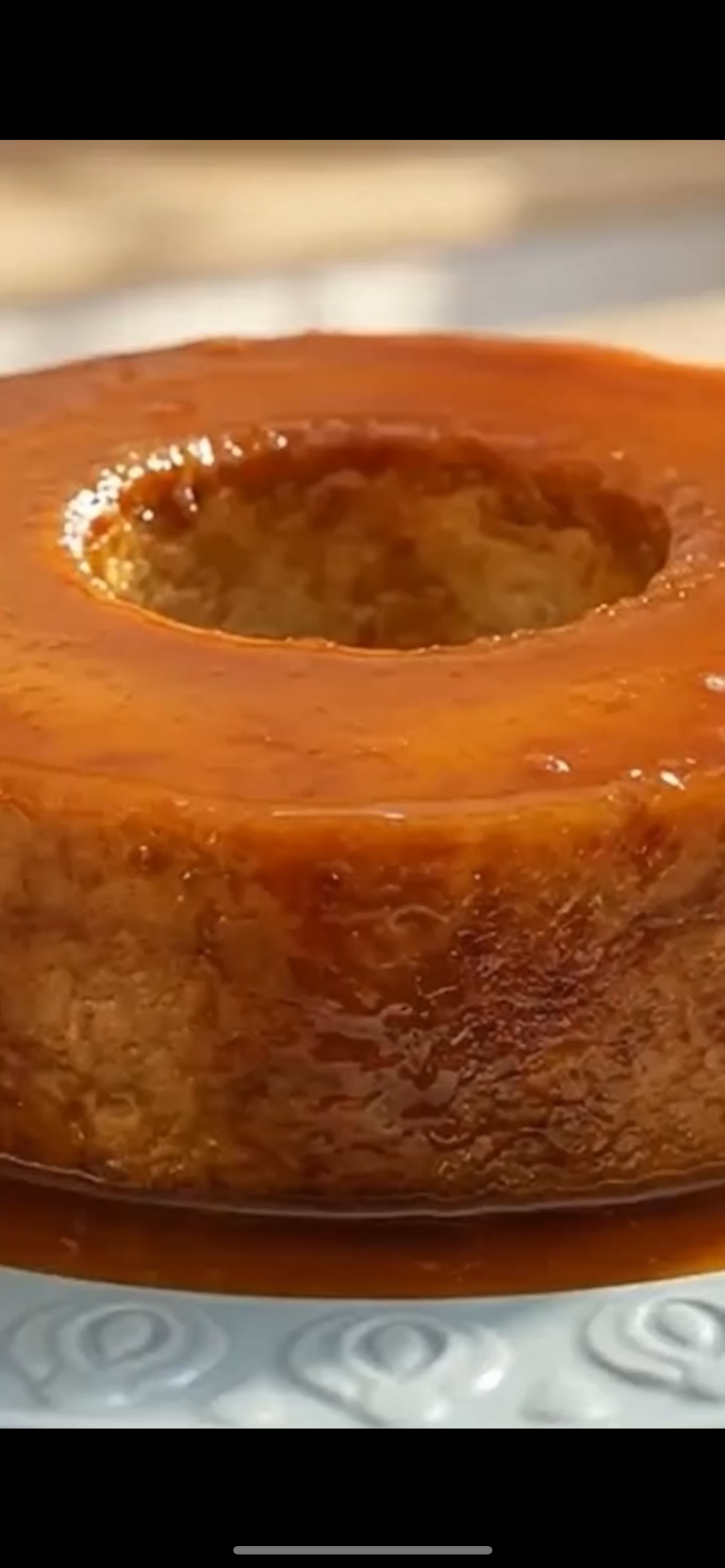
This Caramel-Glazed Bundt Cake is a rich, tender homemade cake covered in a glossy layer of buttery caramel. The cake has a soft, moist crumb with a deep vanilla-butter flavor, while the warm caramel topping creates an irresistible combination of sweetness and richness.
It makes a beautiful centerpiece for family gatherings, afternoon coffee, holidays, or a special homemade dessert.
Recipe Overview
| Category | Details |
| Prep Time | 20 minutes |
| Cook Time | 45–55 minutes |
| Caramel Preparation | 10 minutes |
| Cooling Time | 30–45 minutes |
| Total Time | About 1 hour 30 minutes |
| Servings | 10–12 slices |
| Pan | 10-inch Bundt pan |
| Oven Temperature | 350°F (175°C) |
| Difficulty | Easy–Intermediate |
Why You’ll Love This Recipe
- 🍮 Rich, glossy caramel topping
- 🧈 Buttery, tender cake crumb
- 🍰 Moist without being overly dense
- ✨ Beautiful Bundt presentation
- ☕ Perfect with coffee or tea
- 🎉 Excellent for holidays and special occasions
- 🥄 Made with simple baking ingredients
Ingredients
For the Cake
| Ingredient | Amount |
| All-purpose flour | 2½ cups (300 g) |
| Baking powder | 2 teaspoons |
| Baking soda | ½ teaspoon |
| Salt | ½ teaspoon |
| Unsalted butter, softened | 1 cup (225 g) |
| Granulated sugar | 1½ cups (300 g) |
| Large eggs | 4 |
| Vanilla extract | 2 teaspoons |
| Buttermilk | 1 cup (240 ml) |
For the Caramel Glaze
| Ingredient | Amount |
| Brown sugar | 1 cup (200 g) |
| Unsalted butter | ½ cup (113 g) |
| Heavy cream | ½ cup (120 ml) |
| Vanilla extract | 1 teaspoon |
| Salt | ¼ teaspoon |
Step-by-Step Instructions
1. Prepare the Bundt Pan
Preheat the oven to 350°F (175°C).
Generously grease a 10-inch Bundt pan, making sure to coat the center tube and all the decorative grooves.
Lightly dust with flour, tapping out any excess.
For an especially reliable release, you can use a baking spray containing flour.
2. Mix the Dry Ingredients
In a medium bowl, whisk together:
- Flour
- Baking powder
- Baking soda
- Salt
Set aside.
3. Cream the Butter and Sugar
Add the softened butter and granulated sugar to a large mixing bowl.
Beat on medium speed for approximately 3–4 minutes, until pale, light, and fluffy.
Scrape down the sides of the bowl as needed.
4. Add the Eggs
Add the eggs one at a time, beating well after each addition.
Add the vanilla extract and mix briefly.
If the mixture looks slightly curdled, don’t worry—it will come together once the flour is incorporated.
5. Combine the Batter
Add about one-third of the dry ingredients to the butter mixture.
Mix gently.
Add half of the buttermilk and mix again.
Continue alternating the flour mixture and buttermilk, finishing with the dry ingredients.
Mix only until the batter is smooth.
Do not overmix.
6. Fill the Bundt Pan
Spoon the batter evenly into the prepared Bundt pan.
Smooth the surface with a spatula.
Gently tap the pan against the counter once or twice to remove large air pockets.
7. Bake
Bake at 350°F (175°C) for 45–55 minutes.
The cake is ready when a toothpick inserted into the thickest part comes out clean or with a few moist crumbs.
The cake should be golden brown and slightly spring back when gently pressed.
8. Cool the Cake
Let the cake cool in the pan for approximately 10–15 minutes.
Carefully invert it onto a serving plate.
Allow it to cool further while you prepare the caramel glaze.
Make the Caramel Glaze
9. Combine the Ingredients
Place the brown sugar, butter, heavy cream, and salt in a small saucepan.
Heat over medium-low heat, stirring frequently.
10. Cook the Caramel
Once the butter has melted and the sugar has dissolved, bring the mixture to a gentle simmer.
Cook for approximately 2–3 minutes, stirring constantly.
Do not boil aggressively.
Remove from the heat and stir in the vanilla extract.
The caramel will thicken slightly as it cools.
11. Glaze the Cake
Allow the caramel to cool for approximately 5 minutes so it becomes slightly thicker but remains pourable.
Slowly spoon the caramel over the cooled Bundt cake.
Let some of the caramel naturally run down the sides and into the center of the cake, creating the glossy appearance shown in the image.
Allow the glaze to set for 10–15 minutes before slicing.
Best Tips
Use room-temperature ingredients
Room-temperature butter, eggs, and buttermilk combine more evenly and produce a smoother batter.
Grease the Bundt pan thoroughly
Bundt cakes can stick easily because of their decorative shape. Pay particular attention to the center tube and grooves.
Don’t overmix
Overmixing after adding the flour can develop too much gluten and make the cake tough.
Don’t overcook the caramel
The caramel should be smooth and glossy. Cooking it too long can make it hard or grainy.
Pour the caramel while slightly warm
Warm caramel spreads much more easily over the cake.
Let the cake cool before glazing
A very hot cake can cause the caramel to become excessively thin and run off the surface.
Best Ingredient Options
Butter
Use unsalted butter for the cake and caramel so you can control the salt level.
Buttermilk
Buttermilk gives the cake a tender texture and subtle tang.
If you don’t have buttermilk, combine 1 cup milk with 1 tablespoon lemon juice or white vinegar, let it stand for 5–10 minutes, then use it.
Brown Sugar
Light brown sugar works well, while dark brown sugar gives the caramel a deeper molasses flavor.
Heavy Cream
Heavy cream produces a smooth, rich caramel glaze.
Recipe Variations
Salted Caramel Bundt Cake
Add an extra pinch of flaky sea salt over the finished caramel glaze.
Pecan Caramel Cake
Sprinkle ½–1 cup toasted chopped pecans over the cake before the caramel sets.
Vanilla Caramel Cake
Add an additional teaspoon of vanilla extract to the cake batter for a stronger vanilla flavor.
Cinnamon Caramel Cake
Add 1 teaspoon ground cinnamon to the dry ingredients for a warm, spiced variation.
Chocolate Caramel Cake
Replace ¼ cup of the flour with unsweetened cocoa powder and add chocolate chips to the batter.
What to Serve With
Serve slices with:
- ☕ Fresh coffee
- 🍵 Black tea
- 🍨 Vanilla ice cream
- 🥛 Whipped cream
- 🍓 Fresh berries
- 🌰 Toasted pecans
- 🍎 Warm cinnamon apples
A scoop of vanilla ice cream slowly melting over a warm slice makes an especially delicious dessert.
Make-Ahead Instructions
The cake can be baked 1 day ahead.
Allow it to cool completely, then cover tightly and keep at room temperature.
Prepare the caramel glaze shortly before serving for the glossiest finish.
You can also prepare the caramel several hours ahead and gently warm it over low heat until it becomes pourable again.
Storage
Store the glazed cake in an airtight container at room temperature for up to 3 days.
For longer storage, refrigerate it for up to 5 days.
Allow refrigerated slices to come closer to room temperature before serving for the best texture.
Reheating
For a warm dessert, place an individual slice in the microwave for approximately 10–15 seconds.
You can also warm slices in a low-temperature oven for several minutes.
Avoid overheating because the caramel can become extremely hot.
Freezing
For best results, freeze the unglazed cake.
- Cool the cake completely.
- Wrap tightly in plastic wrap.
- Add a layer of aluminum foil or place it in a freezer-safe bag.
- Freeze for up to 3 months.
- Thaw overnight in the refrigerator.
- Bring to room temperature before adding freshly prepared caramel.
Common Mistakes to Avoid
❌ Not greasing the Bundt pan properly
Even a delicious cake can be difficult to remove if the pan isn’t prepared well.
❌ Using cold butter
Cold butter won’t cream properly with the sugar.
❌ Overmixing the batter
Mix just until the flour disappears.
❌ Overbaking
Overbaking can make the cake dry and reduce the contrast between the tender crumb and caramel topping.
❌ Pouring extremely hot caramel over the cake
Let the caramel cool slightly before glazing.
❌ Cutting the cake immediately
Allow the caramel to set for a few minutes so the slices hold together neatly.
Nutrition Estimate
Approximate per slice, assuming 12 servings:
| Nutrient | Estimated Amount |
| Calories | ~520 kcal |
| Carbohydrates | ~66 g |
| Protein | ~6 g |
| Fat | ~27 g |
| Saturated Fat | ~16 g |
| Sugar | ~43 g |
| Fiber | ~1 g |
| Sodium | ~250 mg |
Nutrition values are estimates and will vary according to ingredient brands, serving size, and the amount of caramel absorbed or served.
Frequently Asked Questions
Why did my Bundt cake stick to the pan?
The most common causes are insufficient greasing, not flouring the pan, or trying to remove the cake before it has rested for 10–15 minutes.
Can I make this cake without buttermilk?
Yes. Use the homemade buttermilk substitute described above, or use plain yogurt thinned with a little milk.
How do I make the caramel thicker?
Allow it to cool for several minutes before pouring. It naturally becomes thicker as its temperature decreases.
Why is my caramel grainy?
Sugar crystals can form if the mixture is cooked too aggressively or if undissolved sugar remains on the sides of the pan. Cook gently and stir until the sugar has dissolved.
Can I use salted butter?
Yes. If using salted butter, reduce or omit the additional salt in the cake and caramel.
Can I add nuts?
Absolutely. Toasted pecans or walnuts pair particularly well with caramel.
Can I make this cake in a loaf pan?
Yes, but the baking time will change. Don’t fill the pan more than about two-thirds full, and begin checking for doneness earlier.
Can I make the cake ahead of time?
Yes. The cake can be baked the day before and glazed shortly before serving.
Final Thoughts
This Caramel-Glazed Bundt Cake is the kind of homemade dessert that looks impressive while remaining surprisingly straightforward to prepare. The tender vanilla-butter cake provides the perfect base for the rich, glossy caramel glaze.
For the best result, grease your Bundt pan generously, avoid overmixing the batter, bake only until the cake is just done, and pour the caramel over the cake while it is still warm and glossy.
The combination of soft cake and buttery caramel makes every slice rich, moist, and completely irresistible.