
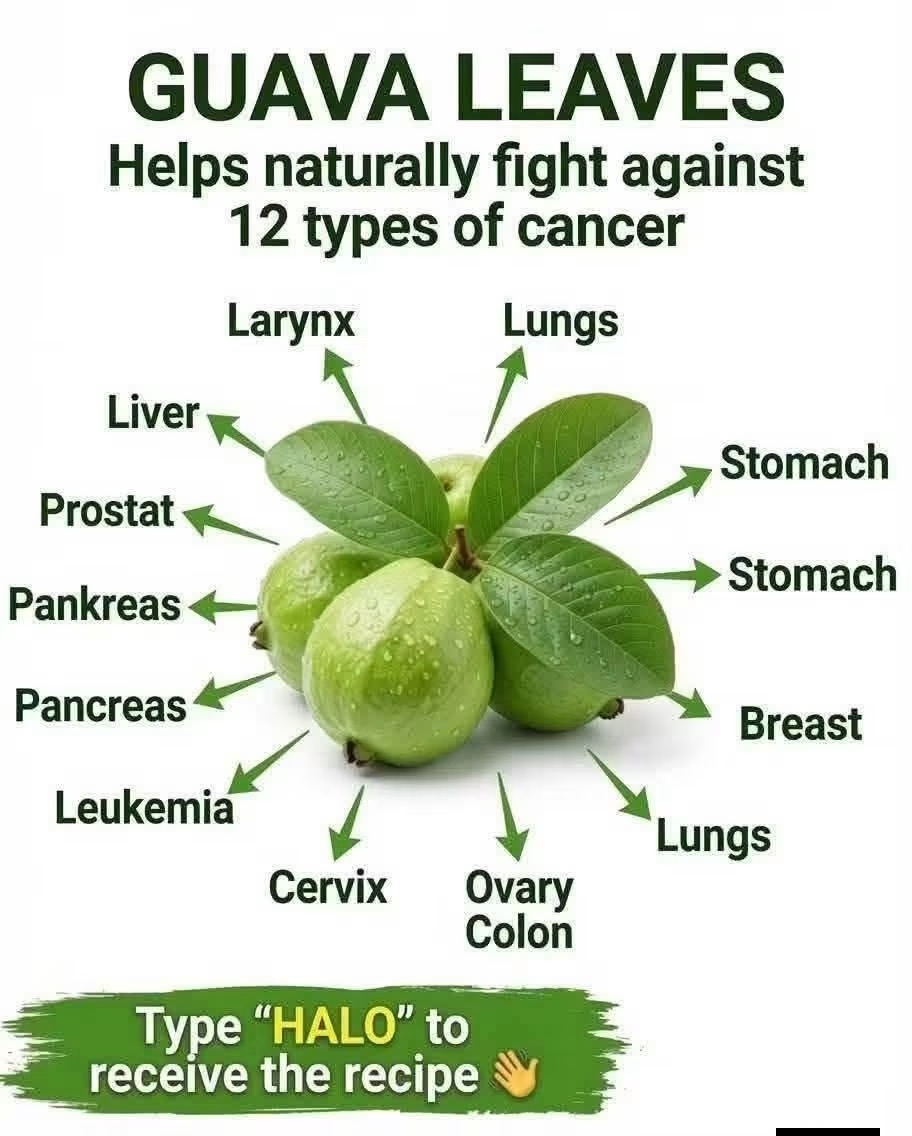
The image claims that guava leaves can naturally fight 12 types of cancer, including cancers of the lungs, stomach, liver, pancreas, prostate, breast, cervix, ovary, colon, larynx, and leukemia.
Guava leaves (Psidium guajava) are interesting from a research perspective because they contain polyphenols and other plant compounds with antioxidant and anti-inflammatory activity. Laboratory studies have also found that guava-leaf extracts can affect the growth of certain cancer cells. However, this is very different from proving that guava leaves treat or cure cancer in people.
The National Cancer Institute states that no herb, food, supplement, or special diet has been proven to slow, cure, or prevent cancer from returning, and some herbal products can interfere with cancer treatment.
So, rather than presenting guava leaf tea as a cancer treatment, here’s a safer way to prepare it as a traditional herbal beverage.
🍵 Simple Guava Leaf Tea
Recipe Overview
| Category | Details |
| Prep Time | 5 minutes |
| Cook Time | 10–15 minutes |
| Total Time | 15–20 minutes |
| Servings | 2 cups |
| Difficulty | Easy |
| Type | Herbal Tea |
| Main Ingredient | Guava leaves |
❤️ Why You’ll Love This Recipe
- 🌿 Uses a simple, inexpensive ingredient.
- 🍵 Makes a warm, refreshing herbal drink.
- 🍃 Guava leaves contain naturally occurring polyphenols and other plant compounds.
- 💧 Can be enjoyed without added sugar.
- 🍋 Lemon or a small amount of honey can be added for flavor.
- ☕ It is easy to prepare at home.
Important: These potential nutritional or antioxidant properties should not be interpreted as evidence that guava-leaf tea treats cancer.
🛒 Ingredients
| Ingredient | Amount |
| Fresh guava leaves | 5–7 young leaves |
| Water | 2 cups (480 ml) |
| Lemon juice | 1–2 teaspoons, optional |
| Honey | 1 teaspoon, optional |
Choosing Guava Leaves
Use clean, healthy leaves from a plant that you can confidently identify as Psidium guajava. Wash them thoroughly under running water before using.
👩🍳 Step-by-Step Instructions
1. Wash the leaves
Rinse the guava leaves thoroughly to remove dirt and surface debris.
2. Prepare the water
Add 2 cups of water to a small saucepan and bring it to a gentle boil.
3. Add the leaves
Add the washed guava leaves to the water.
4. Simmer
Reduce the heat and simmer gently for approximately 10–15 minutes.
5. Strain
Remove the saucepan from the heat and strain the tea through a fine strainer.
Do not chew or eat the leaves.
6. Serve
Allow the tea to cool slightly. Add a little lemon juice or honey if desired.
Enjoy it warm or refrigerate it for a chilled herbal drink.
🌿 What Does the Research Actually Say?
This is the most important part of the recipe.
Researchers have investigated guava and guava-leaf extracts for possible biological effects. Laboratory research has reported activity against certain cancer cell lines, and reviews describe potential mechanisms involving cell growth, apoptosis, migration, and other processes.
But these studies frequently involve concentrated extracts and cancer cells in laboratory settings, rather than people drinking ordinary guava-leaf tea.
Therefore:
“Guava leaves show anticancer activity in laboratory research” does not mean “guava-leaf tea cures cancer.”
There is currently no good clinical evidence demonstrating that drinking guava-leaf tea can treat the 12 cancers listed in the image.
The NCI specifically notes that no herbal product has been demonstrated to be effective for treating cancer.
⭐ Best Tips
- Use correctly identified guava leaves.
- Wash the leaves carefully before preparation.
- Avoid making extremely concentrated preparations.
- Don’t add large amounts of sugar if you’re drinking the tea for general wellness.
- If you’re taking medication, check with a healthcare professional before regularly consuming medicinal amounts of herbal products.
- If you have cancer, never substitute guava tea for surgery, chemotherapy, radiation, immunotherapy, targeted therapy, or other prescribed treatment.
🍋 Best Ingredient Options
Guava Leaves + Lemon
Adds a bright, citrusy flavor.
Guava Leaves + Ginger
A small slice of fresh ginger gives the tea a warmer, spicier flavor.
Guava Leaves + Honey
A teaspoon of honey can soften the naturally herbal taste.
Iced Guava Leaf Tea
Cool the strained tea completely and serve over ice with lemon.
🌱 Recipe Variations
1. Lemon Guava Leaf Tea
Add 1–2 teaspoons of fresh lemon juice after brewing.
2. Ginger Guava Tea
Add 2–3 thin slices of fresh ginger while simmering.
3. Chilled Guava Tea
Refrigerate the strained tea and serve cold.
4. Light Herbal Blend
Combine guava leaves with a small amount of another culinary herb for flavor rather than making the drink highly concentrated.
🥗 What to Serve With It
Guava leaf tea pairs nicely with:
- Fresh fruit
- Oatmeal
- Whole-grain toast
- Yogurt
- Light breakfast pastries
- Nuts and seeds
If you’re focusing on cancer prevention and overall health, the bigger picture matters much more than one herbal drink. A balanced diet, regular physical activity, avoiding tobacco, limiting alcohol, and appropriate cancer screening have much stronger evidence than relying on a particular tea.
⏰ Make-Ahead Instructions
Prepare the tea as directed, allow it to cool, and transfer it to a clean covered container.
For best quality, refrigerate and use within 1–2 days.
❄️ Storage
Store prepared tea in the refrigerator in a sealed glass container.
Do not leave homemade herbal tea sitting at room temperature for prolonged periods.
🔥 Reheating
Warm refrigerated tea gently on the stovetop or in the microwave.
Avoid repeatedly boiling the same batch.
🧊 Freezing
You can freeze cooled tea in ice-cube trays and use the cubes later in chilled herbal drinks.
⚠️ Common Mistakes to Avoid
Mistake 1: Believing the image proves a cancer cure
It doesn’t. The cancer claims go beyond the available human evidence.
Mistake 2: Using guava tea instead of medical treatment
This can be dangerous. The NCI warns that alternative cancer treatments used instead of proven medical care can lead to worse outcomes.
Mistake 3: Assuming “natural” means completely safe
Herbal products can interact with medicines. The NCI recommends telling your healthcare professional about supplements and herbal products you’re using.
Mistake 4: Making extremely concentrated tea
More is not necessarily better. There is no established medicinal dose of guava-leaf tea for treating cancer.
🥄 Nutrition Estimate
For unsweetened guava-leaf tea:
| Nutrient | Approximate Amount |
| Calories | 0–5 kcal |
| Carbohydrates | <1 g |
| Protein | 0 g |
| Fat | 0 g |
| Added Sugar | 0 g |
| Caffeine | 0 mg |
Adding honey or sugar will increase the calories and carbohydrates.
❓ Frequently Asked Questions
Can guava leaves cure cancer?
No. There is currently no reliable clinical evidence showing that guava leaves or guava-leaf tea can cure cancer. Laboratory studies are interesting, but they cannot establish that a tea treats cancer in humans.
Which cancers can guava leaves treat?
There is no established list of cancers that guava leaves can treat. The 12 cancers displayed in the image should not be interpreted as clinically proven indications.
Do guava leaves kill cancer cells?
Some guava extracts have demonstrated effects against certain cancer cells in laboratory research. However, laboratory activity does not establish that drinking guava-leaf tea kills cancer cells inside a person.
Can I drink guava leaf tea during chemotherapy?
Don’t assume that it is safe. Herbal products can potentially interact with cancer medicines or alter how treatments work. Discuss guava-leaf products with your oncologist or pharmacist before using them during treatment.
Is guava fruit healthy?
Yes, guava fruit can be part of a balanced diet and provides nutrients such as vitamin C and dietary fiber. But eating guava should not be presented as a cancer treatment.
Can I drink this tea every day?
There isn’t enough evidence to establish a specific therapeutic daily dose of guava leaves. If you want to consume it regularly, especially in medicinal quantities, discuss it with a healthcare professional.
🌿 Final Thoughts
Guava leaves are a fascinating traditional plant ingredient, and scientific research has identified potential antioxidant and anticancer activity in guava extracts, particularly in laboratory studies.
However, the viral claim that guava leaves can naturally fight 12 different types of cancer is not supported by clinical evidence.
A cup of guava leaf tea can be enjoyed as a traditional herbal beverage, but it should never be presented as a cancer cure or used instead of evidence-based medical treatment. The National Cancer Institute recommends discussing herbal and complementary therapies with your healthcare team because they can sometimes interfere with conventional cancer treatment.
⚠️ This recipe may not be suitable for everyone, so it is advisable to consult a doctor, especially if you have cancer, are receiving cancer treatment, are pregnant or breastfeeding, or take prescription medication.