
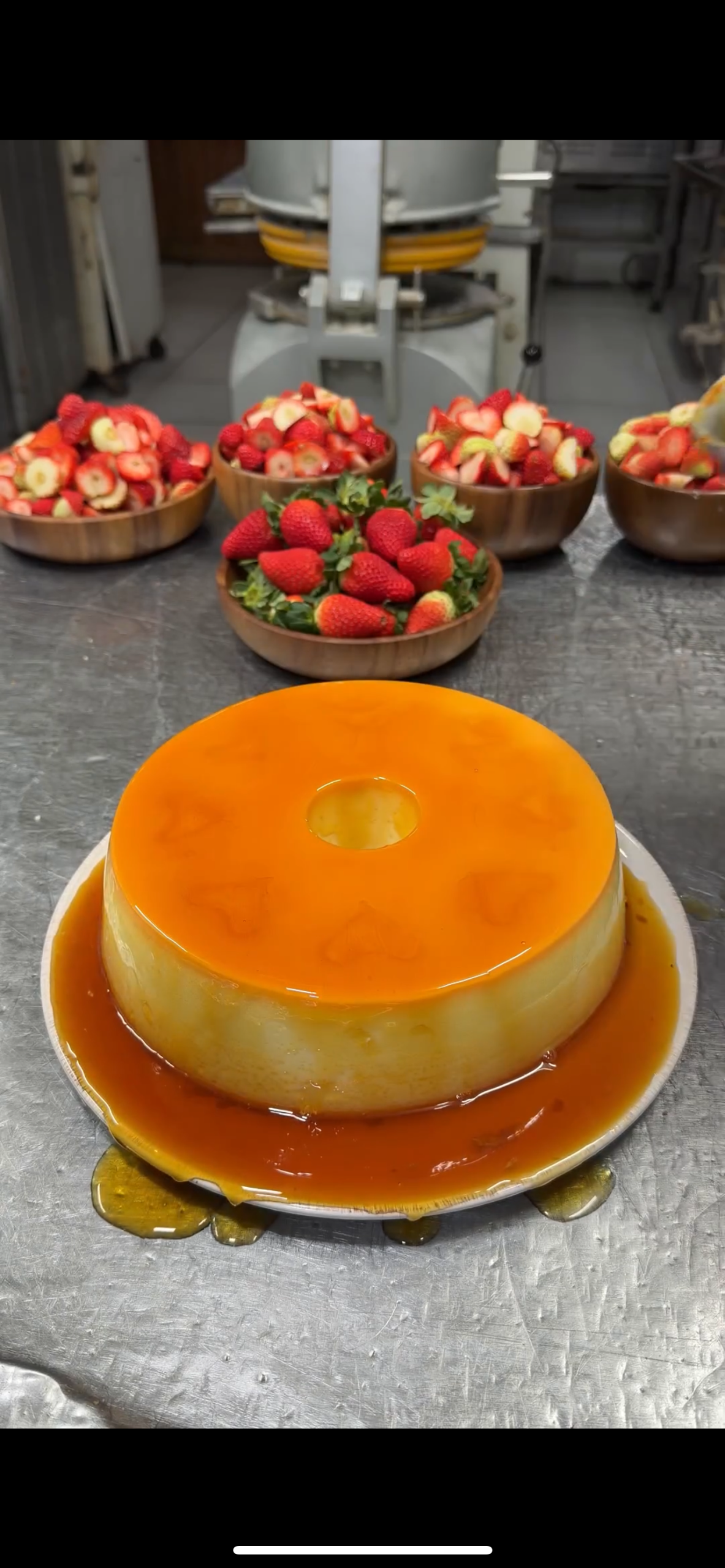
This Classic Caramel Flan is a silky, creamy custard dessert topped with a rich golden caramel sauce. Made with sweetened condensed milk, evaporated milk, eggs, and vanilla, this traditional-style flan has a smooth texture and a beautiful caramel coating that flows over the custard when inverted.
Baking the flan gently in a water bath (bain-marie) helps the custard cook evenly and remain tender rather than becoming rubbery or cracked. It’s an elegant dessert that’s surprisingly simple to prepare and perfect for family dinners, holidays, celebrations, and special occasions.
Recipe Overview
| Category | Details |
| Prep Time | 20 minutes |
| Cook Time | 50–60 minutes |
| Cooling Time | 30–45 minutes |
| Chilling Time | At least 4 hours |
| Total Time | About 5½ hours |
| Servings | 8–10 |
| Pan | Tube/Bundt pan |
| Oven Temperature | 350°F (175°C) |
| Cooking Method | Bain-marie |
| Difficulty | Easy–Intermediate |
Why You’ll Love This Recipe
- 🍮 Smooth and silky custard
- 🍯 Rich homemade caramel sauce
- 🥛 Creamy texture from condensed and evaporated milk
- ✨ Elegant presentation when inverted
- 🌡️ Gentle water-bath baking helps prevent overcooking
- 🧊 Perfect make-ahead dessert
- 🎉 Excellent for holidays and celebrations
Ingredients
For the Caramel Sauce
| Ingredient | Amount |
| Granulated sugar | 1 cup (200 g) |
| Water | ¼ cup (60 ml) |
For the Flan Batter
| Ingredient | Amount |
| Sweetened condensed milk | 1 can (14 oz / 397 g) |
| Evaporated milk | 1 can (12 oz / 354 ml) |
| Large eggs | 4 |
| Vanilla extract | 1 teaspoon |
| Salt | Pinch |
Step-by-Step Instructions
1. Prepare the Oven and Water Bath
Preheat your oven to 350°F (175°C).
Place a tube pan or Bundt-style mold inside a larger, deep roasting or baking dish.
This larger dish will be used for the bain-marie, or water bath.
Safety tip: Because the water will be very hot, it’s easier and safer to add the boiling water after the filled flan pan has been placed in the oven.
2. Make the Caramel
Add the sugar and water to a medium saucepan.
Place over medium heat.
Allow the sugar to dissolve and begin caramelizing without stirring.
You can gently swirl the saucepan occasionally to encourage even browning.
Continue cooking until the syrup reaches a deep golden-amber color.
Watch it carefully—the caramel can go from perfectly golden to burnt very quickly.
3. Pour the Caramel Into the Mold
Immediately pour the hot caramel into the bottom of the tube pan.
Carefully tilt and rotate the pan so the caramel coats the bottom evenly and reaches around the inner tube.
Be extremely careful: caramelized sugar is extremely hot and can cause serious burns.
Allow the caramel to sit for approximately 5 minutes until it begins to harden.
4. Prepare the Custard
Add the following to a blender:
- Sweetened condensed milk
- Evaporated milk
- Eggs
- Vanilla extract
- Pinch of salt
Blend on low speed for 1–2 minutes, just until the mixture becomes smooth and uniform.
Avoid high-speed blending because it incorporates unnecessary air into the custard.
Let the mixture rest for approximately 2 minutes so any foam can settle.
5. Strain the Custard
Place a fine-mesh sieve over the caramel-lined tube pan.
Slowly pour the custard mixture through the sieve.
This removes small pieces of egg and helps create a smoother finished flan.
6. Cover the Pan
Cover the tube pan tightly with aluminum foil.
A tight covering helps prevent excess moisture from the water bath from getting into the custard.
7. Set Up the Bain-Marie
Place the covered tube pan inside the larger baking dish.
Carefully pour boiling water into the outer baking dish.
The water should reach approximately halfway up the side of the tube pan.
This gentle, even heat helps the custard cook gradually.
8. Bake
Carefully transfer the baking dish to the preheated oven.
Bake for approximately 50–60 minutes.
The flan is ready when the edges are set and the center has a slight wobble when the pan is gently moved.
Don’t wait for the center to become completely firm in the oven. It will continue setting as it cools.
9. Remove From the Water Bath
Carefully remove the entire baking setup from the oven.
Take the tube pan out of the hot water bath.
Remove the foil carefully, keeping your hands away from escaping steam.
Allow the flan to cool to room temperature.
10. Chill Thoroughly
Once cooled, cover the pan and refrigerate for at least 4 hours.
For the best texture and easiest release, refrigerate it overnight.
11. Invert the Flan
When you’re ready to serve, run a thin knife gently around the outer edge of the flan.
Also run the knife carefully around the inner tube.
Place a large rimmed serving plate over the top of the pan.
Quickly but carefully invert the pan and plate together.
Gently lift the mold away.
The caramel should flow over the sides of the creamy flan, creating the classic glossy finish.
Best Tips
Don’t stir the caramel
Stirring can encourage sugar crystals to form. Swirl the pan gently instead.
Watch the caramel closely
The difference between golden amber and burnt caramel can happen within seconds.
Blend on low speed
Too much air can create bubbles and holes in the finished custard.
Strain the custard
This small step makes a noticeable difference in achieving a smooth, silky flan.
Don’t overbake
A slight jiggle in the center is desirable. Overbaking can make the custard firm, rubbery, or grainy.
Chill overnight when possible
A longer chilling period gives the flan time to fully set and makes unmolding easier.
Use a rimmed plate
When the flan is inverted, plenty of caramel will flow around it. A rimmed serving plate helps contain the sauce.
Best Ingredient Options
Sweetened Condensed Milk
Use regular full-sugar sweetened condensed milk. Do not substitute evaporated milk for it because they have very different compositions.
Evaporated Milk
Full-fat evaporated milk provides the richest texture.
Eggs
Large eggs are ideal. Using room-temperature eggs can make blending easier.
Vanilla
Pure vanilla extract gives the custard a warm, classic flavor. Vanilla bean paste can also be used.
Sugar
Regular granulated white sugar is best for making the caramel.
Recipe Variations
Vanilla Bean Flan
Add the seeds from ½ vanilla bean to the custard for a more intense vanilla flavor.
Coconut Flan
Replace part of the evaporated milk with unsweetened coconut milk and add shredded coconut to the custard.
Coffee Flan
Add 1–2 teaspoons instant espresso powder to the custard for a subtle coffee flavor.
Orange Flan
Add 1 teaspoon finely grated orange zest to the custard.
Cinnamon Flan
Add ½ teaspoon ground cinnamon for a warm, spiced variation.
Chocolate Flan
Add melted chocolate or unsweetened cocoa powder to create a richer chocolate version.
What to Serve With
Serve flan chilled with:
- ☕ Fresh coffee
- 🍵 Black tea
- 🍓 Fresh strawberries
- 🫐 Fresh berries
- 🍊 Orange slices
- 🥥 Toasted coconut
- 🍦 A small scoop of vanilla ice cream
The flan is already rich and sweet, so fresh fruit provides a pleasant contrast.
Make-Ahead Instructions
Flan is an excellent make-ahead dessert.
Prepare it 1–2 days before serving and keep it refrigerated in the mold.
For the cleanest presentation, leave it unmolded until shortly before serving.
Storage
Keep leftover flan covered and refrigerated.
It is best consumed within approximately 3–4 days.
Always use clean utensils when serving and return leftovers to the refrigerator promptly.
Reheating
Traditional flan is served cold or chilled, so reheating isn’t necessary.
Avoid heating the entire flan because excessive heat can cause the custard to lose its smooth texture.
Freezing
Freezing is generally not recommended for the best texture.
Custard-based desserts can become watery or slightly grainy after freezing and thawing.
For the smoothest result, prepare the flan fresh and refrigerate it instead.
Common Mistakes to Avoid
❌ Burning the caramel
Remove it from the heat as soon as it reaches a deep amber color.
❌ Stirring the caramel
Gentle swirling is preferable to constant stirring.
❌ Adding too much water to the bain-marie
The water should reach roughly halfway up the flan pan, not near the top.
❌ Overbaking
The center should still have a gentle wobble when the flan comes out of the oven.
❌ Skipping the straining step
Straining removes unwanted egg particles and helps create a silky texture.
❌ Unmolding before the flan is fully chilled
A warm flan is much more likely to break apart.
❌ Using a flat plate
Caramel sauce will flow around the flan, so use a rimmed serving plate.
Nutrition Estimate
Approximate values per serving, assuming 10 servings:
| Nutrient | Estimated Amount |
| Calories | ~300 kcal |
| Carbohydrates | ~43 g |
| Protein | ~8 g |
| Fat | ~10 g |
| Saturated Fat | ~6 g |
| Sugar | ~42 g |
| Fiber | ~0 g |
| Sodium | ~115 mg |
Nutrition information is an estimate and will vary according to ingredient brands and serving size.
Frequently Asked Questions
Why did my caramel become hard?
That’s normal. Caramel hardens as it cools. Once the custard is added and the flan is chilled, the caramel will gradually soften and turn into the sauce that coats the flan when inverted.
Why is my flan full of bubbles?
The custard may have been blended at too high a speed. Blend gently and allow the mixture to rest before straining.
Why is my flan rubbery?
Overbaking is usually the main culprit. Remove the flan when the center still has a slight wobble.
How do I know when flan is done?
The edges should be set while the center gently jiggles when the pan is moved. The custard will firm up as it cools and chills.
Can I make flan without a water bath?
You can, but a water bath provides gentler and more even heat, making it easier to achieve the characteristic smooth custard texture.
Why won’t my flan come out of the pan?
Make sure it has been chilled thoroughly. Run a thin knife around both the outside and inside edges, then invert it quickly onto a rimmed plate.
Can I use a regular cake pan?
Yes. A round cake pan can work, although the baking time may change depending on its depth.
Can I make this flan the day before?
Yes. Overnight refrigeration is actually ideal and often makes unmolding easier.
Final Thoughts
This Classic Caramel Flan is a wonderfully simple dessert with an impressive presentation. The silky custard is rich and creamy, while the homemade caramel creates a beautiful glossy sauce that cascades over the flan when it’s inverted.
The keys to success are carefully caramelizing the sugar, blending the custard gently, straining it before baking, using a bain-marie, and chilling the flan thoroughly before unmolding.
Serve it cold with plenty of caramel sauce for an elegant dessert that’s perfect for family dinners, celebrations, holidays, and special occasions.